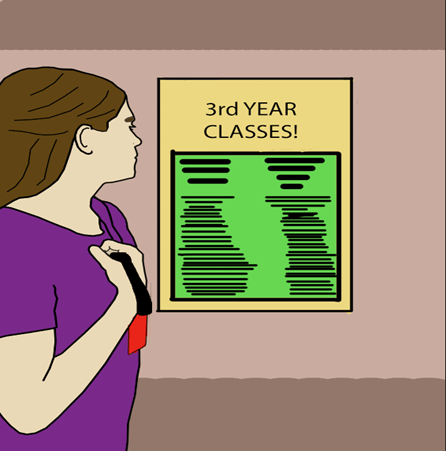
By Jerica Bernfield // Reporter • Illustration By Jerica Bernfield
As you go through high school, many students hear something like this: These are the most important years of your lives. One of the biggest years that comes to your attention. Scheduling is called down all the same. The same transcript. The same blue paper. The same list of classes. But the standards change.
Throughout high school, students are aware of the pressure and standards that are always surrounding them. One of the biggest years students go through is junior year.
One of the biggest differences about junior year is that this is the baseline year colleges start looking at grades. Counselor Alexis Borcherding speaks on the topic: “When you’re filling out all those college applications, their most recent data is all from your junior year.” Borcherding explains that while entire transcripts are available to them, most colleges start by looking at the grades of your junior year.
While grades are important, it doesn’t always mean being crushed under weeks of homework and impossible math problems. “I find that the tests and general amount of knowledge that I have to learn is a lot more manageable this year than it was previously” said Max Hunter, a current junior at Avon High School. He explains that junior year, while it might mean having a higher amount of work, doesn’t always have a higher work difficulty.
“My workload’s higher, which I think just makes sense going into more AP classes” said Hunter.
Since colleges start looking at grades and workloads depend on classes, it’s important to know what you want to do and what classes are best for you to take. Knowing where you want to go after high school is critical for choosing classes. While education is an important factor, Hunter explains that you need to find a balance between education and what you’re interested in. “My freshman and sophomore year, I got my Spanish through, I got my sciences through, so this year I was able to specialize more in history, which is what I want to major in.”
It doesn’t matter where you choose to go afterwards, being able to enjoy your classes will make or break your high school years.
As you get to become an upperclassman, classes start to broaden. Clubs are more likely to take you for a higher position- president, secretary, vice president- which impacts what colleges see. “I think those are great opportunities to take advantage of and show colleges that you can handle those classes and that you’re ready for that” Borcherding said when discussing the options for dual credit and AP; one of the many opportunities that become available during your junior year.
Another great resource that juniors can partake in is Area 31. This program is run at Ben Davis and is perfect for students wanting to get hands on experience and skills for their career paths or to gain experience for trades such as plumbing or construction. Jobs available include nursing, firefighting, to welding, culinary, and EMT work to name a few. The academic program combines hands-on experience with qualified teachers with coursework and writing for a balance perfect for people who need a different style of learning.
Junior year is a transition between normal high school years and your future. While this can be an exciting time to map out the future, it’s also one of the most stressful years of school. Many students find taking on the new courses and responsibilities end up being more than they’re prepared for or they’re not ready for different workflows. When you’re not ready, it can be easy to be run over by everything which is exactly how burnout happens.
Borcherding touches on the subject “High school is four years so it can get long” she said, “The mistake is not recognizing that burn out is a real thing.” Burnout isn’t an obvious shut down and it’s not always shown by a sudden explosion of stress. It often shows as procrastination, lack of interest in subject you liked, and just losing energy for what you want to do. Everyone is bound to get burnt out at some point in their life but there are things that can help mitigate it and cope through the sudden stresses of junior and senior year.
“I think it’s really great to stay on top of that and practice coping skills and strategies” Borcherding said. Students are encouraged to develop healthy habits to deal with schoolwork stress such as taking a break between studying for classes, getting a snack, going on a walk, playing with pets or talking with family. No matter how you choose to take a break, make sure you’re aware of your mental health before something snaps.
No matter what you want your future to look like, junior year is the best time to plan ahead and lay out your path into the future.
“You don’t have to know exactly what you’re going to do after college, but having a good understanding of it is a good way to help your mind focus” said Hunter.
 THE ECHO
Leave a comment