By Aliyah Surakat // Reporter
At AHS, Black History Month may not always be marked by large assemblies or daily announcements, but its impact is still meaningful. The celebration often happens in classrooms, club meetings, and conversations that encourage reflection, pride, and learning. As the nation recognizes 100 years since Black History Month began in 1926 as a weeklong observance, AHS continues to honor that legacy in ways that reflect its own community.
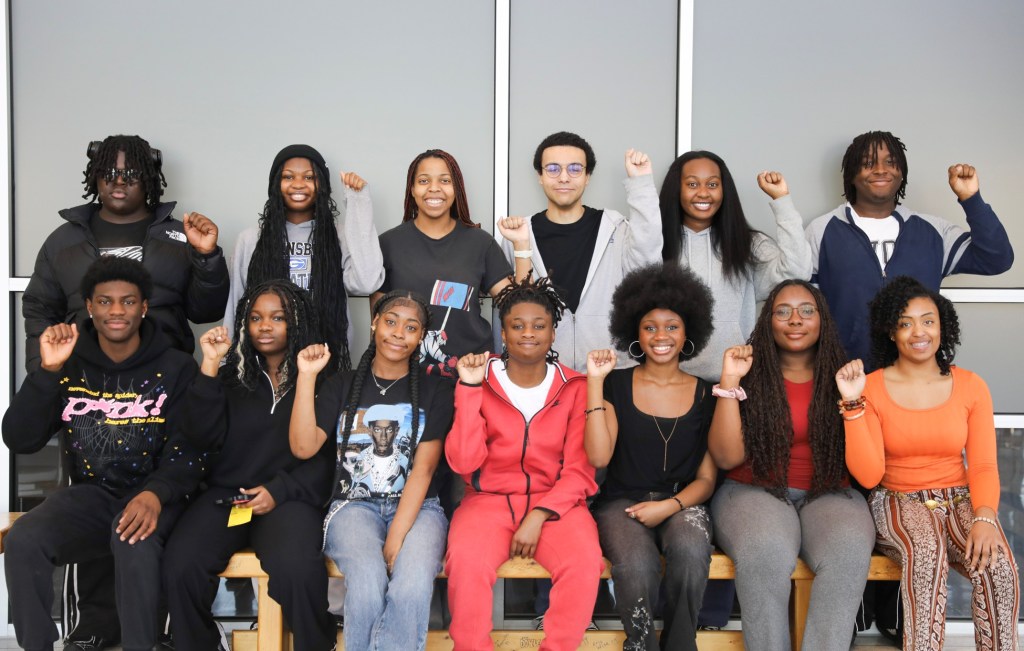
Science teacher Justine Griffin and school social worker Tahirah Purifoy-Jack, sponsors of the school’s Black Student Union (BSU), believe Black History Month remains essential because it highlights more than 400 years of African American history, culture, and achievement. For them, the month is an opportunity to intentionally center stories that are sometimes condensed or briefly covered in traditional curriculum. Through BSU meetings, students are given space to discuss identity, representation, and leadership while building connections with peers who share similar experiences or want to be supportive advocates.
Purifoy-Jack said that students should learn more about influential figures with Indiana ties. Madam C.J. Walker built her successful hair care empire in Indianapolis and became the first African American female millionaire. Major Taylor became the world’s first African American professional cyclist, breaking barriers in sports. Babyface, a Grammy Award winning songwriter and producer from Indiana, has shaped modern music across generations. Purifoy-Jack also highlighted historically Black Greek letter organizations such as Kappa Alpha Psi and Sigma Gamma Rho, both founded in Indiana and known for promoting scholarship, service, and unity on a global scale. Learning about these figures helps students recognize that Black excellence is both local and worldwide.
Beyond highlighting historical figures, Griffin said that true celebration involves consistent representation. She explained that schools can better support Black students by weaving discussions of Black leaders, Historically Black Colleges and Universities, and culturally significant contributions into everyday learning. When representation becomes part of regular classroom conversation rather than a once a year focus, students are more likely to feel seen and valued.
Business teacher Ranielle Moquete, sponsor of African Diaspora, has witnessed significant growth in diversity and cultural awareness during her 18 years at AHS. When she first began teaching, she said there were fewer extracurricular spaces specifically designed to celebrate minority cultures. Over time, that has changed. The school now reflects a broader range of countries, cultures, and backgrounds, something Moquete says is visible simply by observing the hallways between classes.
African Diaspora was created to celebrate diversity while also educating students about shared history. Moquete explained that “diaspora” means descent, referring to the movement of African people across many parts of the world during the transatlantic slave trade. The club hosted some of the first Black History Month programs at AHS, bringing students together to learn about Black history as an essential part of American history. The club also extended its influence beyond the building by hosting a “Be the Change” workshop, which brought together community law enforcement and students of color during a time of national racial tension. The goal was to create dialogue, build understanding, and bridge gaps within the community.
Together, BSU and African Diaspora help ensure that Black History Month at AHS is thoughtful and community centered. Even without large scale events, the celebration continues through meaningful dialogue, education, and student involvement. In that way, Black History Month at AHS is not only about looking back at history, but also about strengthening understanding, connection, and cultural appreciation within the school today.
 THE ECHO
Leave a comment