By Idowu Adeleke // Reporter
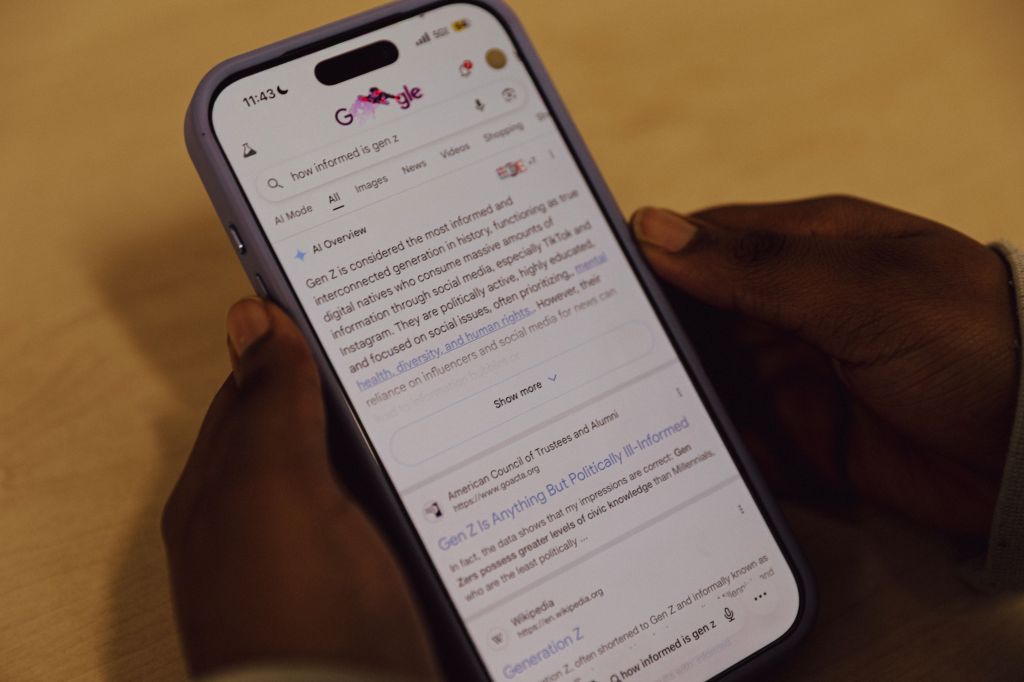
The internet’s role in shaping media consumption is both unique and relatively new in nature. With the proliferation of content, it can be hard to know what to trust.
However, younger generations might be more aware of the dangers of misinformation online, having grown during the digital era.
New research by the media company Raptive, titled DECODING GEN Z: The New Rules of Digital Trust and Influence, sheds light on how Gen Z fares when it comes to identifying bias or misinformation.
49%
This is the proportion of Gen Z actively verifying online information by checking trusted, credible sources. Junior Jay Desai said being knowledgeable takes time.
“I verify the media I consume fairly often but not all the time,” said Desai. “I know I encounter a lot of fake news, so I am not exactly the most confident in the news I read.”
55%
Above is the fraction of Gen Z that says they trust content from established experts over influencers or peer posts. Freshman Adelie Small said artificial intelligence hasn’t made it easy to be well-informed.
“I try to do my own research on the current political climate instead of just blindly trusting a source,” said Small. “I know that I probably see and interact with AI news, so I try to combat that.”
20%
This proportion of adolescents say they are aware of the fake news they encounter daily. Junior Liv Leadman said social media thrives from sensationalized stories.
“I believe Twitter, TikTok, and Instagram have a large saturation of altered content for views,” said Leadman. “I try and verify events through different news networks to see if their stories lines up.”
16%
This much of Gen Z has strong confidence in the news. The heavy concentration of information on the internet encouraged skepticism of what it means to be well-informed.
“I think 98 percent of what I read is fake news,” said junior Janani Devendran. “Being well-informed means you at least look at both sides of the story, but intelligence is what you do with that information.”
 THE ECHO
Leave a comment