by Salem Araya
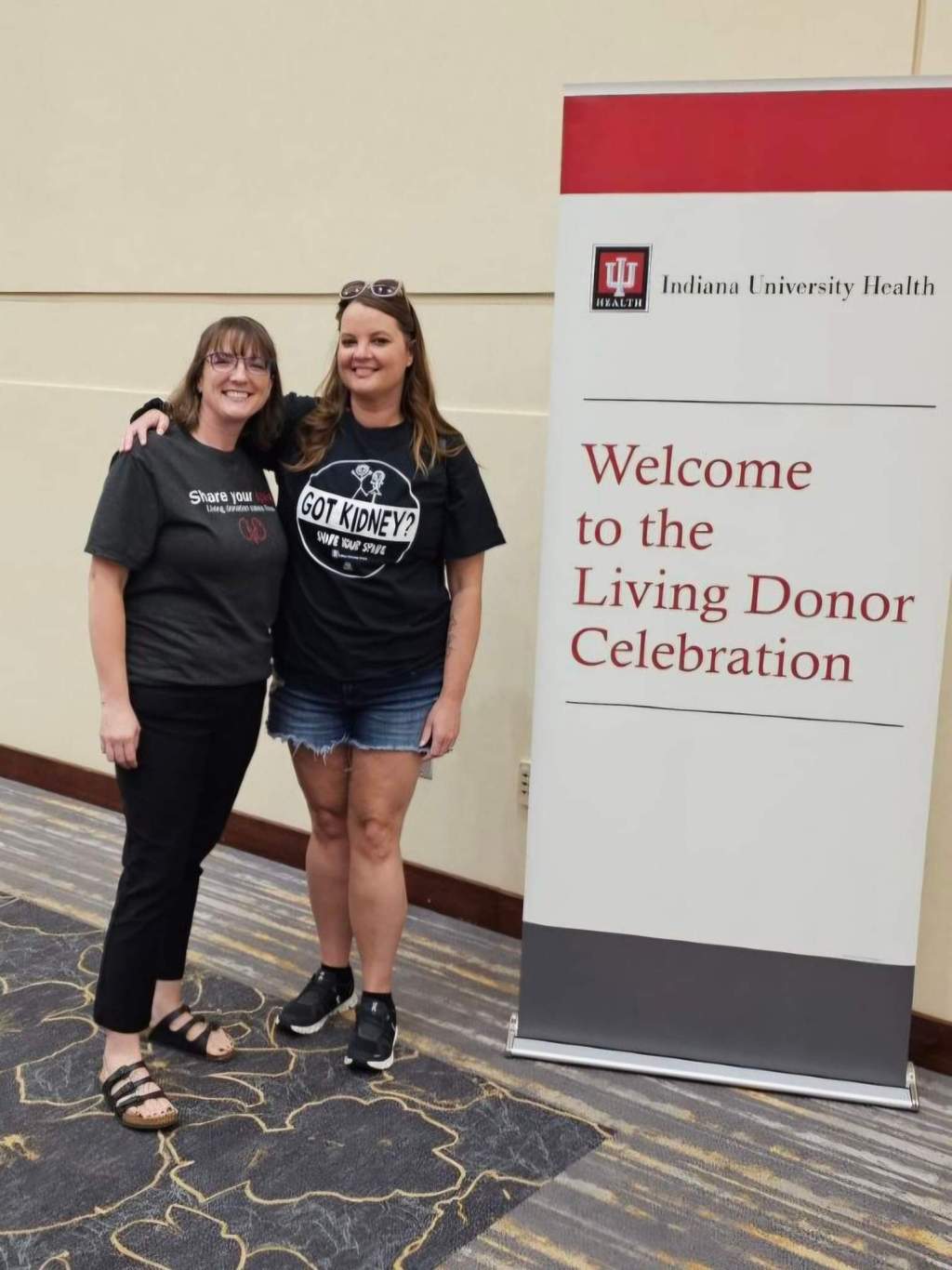
“It’s either you’re gonna die, or potentially have a new life,” recalled resource teacher Mallory Hawkins. “You just have to trust that everything’s going to be fine.”
In December of 2022, Hawkins received the news that her kidney function had deteriorated to a dangerous 14%, an indication of kidney failure. This diagnosis is a result of Hawkins’ IgA Nephropathy, an incurable disease that builds up immunoglobulin A in the kidneys and can lead to kidney damage.
“I was diagnosed in college with my disease,” said Hawkins. “I thought I just had an overactive bladder, so I asked my Mom to take me to the doctor…they did a bunch of tests and then found out that my kidney function was down to 35%.”
Over the next 18 years, Hawkins’ kidney function continued declining until she eventually needed a new one. She was then entered into the IU Living Kidney Program in hopes of finding a donor.
“At first I was very scared, but mostly I felt guilty that people would have to go through the process to donate, and all the pain for me,” said Hawkins.
After sharing these thoughts with coworker and special education department head Megan Erickson, Erickson reassured her that it was okay to ask, and that she and some others from the department would get tested to see if they were a potential match.
“I never had this big drive to donate, and it wasn’t until there was a need that I was like, ‘let’s go,’” said Erickson. “I ended up becoming a potential donor…and was passing every round of testing. So, then I was like, I know this is definitely the right thing.”

As the testing process progressed, the reality of the situation was beginning to set in for both Hawkins and Erickson, but also for their loved ones who now were realizing the risks of the procedure they were about to undertake.
“I told my mom because she’s very rational, so I told her fairly early on, and then I waited to tell my dad until I knew we almost had a surgery date,” said Erickson. “Once I explained, and I kept them updated and things, everyone became okay with it.”
Hawkins and family, however, knew that the surgery was inevitable, and thus tried to brave it as best as they could.
“My parents put on a brave face, but obviously [my mom] was scared,” said Hawkins. “She always said if she could take my place, she would.”
Following a year and a half of tests and preparation, Hawkins and Erickson went under the operating table in April of 2024 to complete the transplant.
The surgery took approximately six to seven hours and took place at IU Health University Hospital in downtown Indianapolis.
In a big surgical procedure like a transplant, it’s common to feel anxiety beforehand, but for Erickson that was no problem.
“I don’t think there was a point where I was so nervous, and that I said that I’m not doing this,” explained Erickson. “I was pretty confident going into everything.”
Hawkins was a little more nervous about surgery, and the idea of getting a new kidney.
“Leading up to the day, I was pretty nervous, but the morning of it was like a sense of peace,” described Hawkins.
The surgery was done by two different teams and resulted in very different experiences for the pair.
Erickson’s procedure was minimally invasive and was completed by a robot that made various incisions to remove the kidney. She spent two days at the hospital and recovered fairly quickly.
Hawkins however, shared that recovery was not so quick for her. Her procedure required a 12-inch incision in the abdomen, and a hospital stay of five days.
“[Erickson] came to visit me wearing jeans,” laughed Hawkins. “And here I still am hitting the Dilaudid every 10 minutes.”
Eight months after the surgery, Hawkins and Erickson both agree that they’ve developed a deeper bond with each other.
“We check in with each other a lot more,” said Erickson. “I’m sure when April rolls around, we’ll find some tradition to do.”
When asked how they felt about switching organs, both agreed that it felt weird for them.
“Sometimes when I pass her in the hallway, I wonder if she’s thinking about her organ walking past her,” chuckled Hawkins.
Erickson chimed in, laughing: “Yeah, every now and then I wonder how Righty is doing.”
This story first appeared in the December 2024 print edition of The Echo.
 THE ECHO
Leave a comment