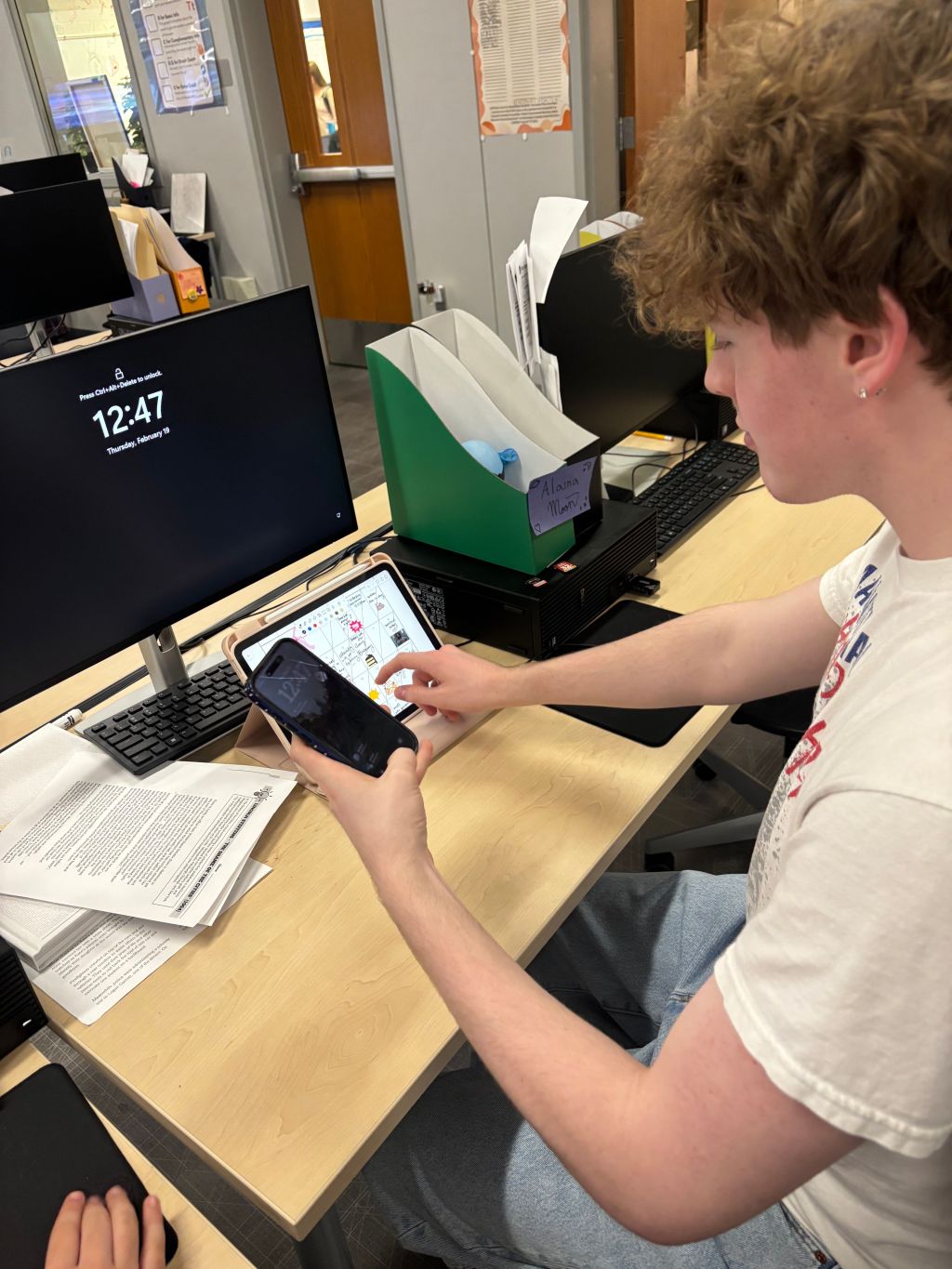
By Lennon Turnipseed // Reporter
From shopping to schoolwork, technology’s convenience has fueled a digital culture that’s especially prominent among today’s teens. Smartphones, tablets, and laptops are now constant companions, shaping the way adolescents communicate, learn, and entertain themselves. Whether checking social media between classes or using online resources for homework, screens are a fixture of daily life for this generation. According to a 2023 National Health Interview Survey, teenagers now spend more time on electronic devices than ever before, with the data revealing new insights into their daily habits.
50.4%
This is the percentage of teenagers aged 12-17 who had 4 or more hours of screen time per day.
Junior Ian Tolentino said the numbers weren’t surprising. “Honestly, I thought the percentage would be even higher,” he admitted, reflecting on his own experience and that of his peers. “Most teens I know are on their phones or computers far more than four hours a day.” For Tolentino and many others, extended device use is simply part of how they keep up with school assignments, group chats, and the latest trends, a routine that feels almost unavoidable in today’s fast-paced environment.
Tolentino estimates his own daily screen time at six hours or more, a number he says is not unusual among his friends. “Everything is online, so it’s not hard to rack up hours quickly,” he explained. Apps for messaging, streaming, and studying all compete for attention, creating a cycle that can be tough to break.
Experts are sounding the alarm about the effects of prolonged screen time on teen mental health, pointing to new research that suggests a clear connection between heavy device use and negative emotional outcomes. The National Health Interview Survey also tracked the impact of high device usage among adolescents over a two-week period, aiming to better understand these emerging patterns.
25.9%
This is the percentage of students who reported experiencing symptoms of depression over the two weeks.
Senior Ashley Hardesty said she’s noticed her mood drop after extended phone use realization that has become more frequent as her screen time has increased. “I always feel bad after I’ve been scrolling for too long,” Hardesty said, adding that it can be difficult to stop even when she knows it’s affecting her negatively.
“I just started to think about all of the other things I could have been doing.”
In contrast, research from Magnet ABA Therapy found that teens who intentionally limited their technology use experienced a positive shift in their emotional well-being. The study suggests that even small changes, like taking breaks from devices or setting screen time limits, can have a noticeable effect on mood and stress levels.
72%
This is the percentage of teens who reported feeling calm when not on their devices.
Junior Ella Hastings said she feels happiest when she’s away from her phone, describing a sense of relief that comes with being disconnected. “I always feel best when I forget I even have a phone,” Hastings said, noting that these moments usually happen when she’s busy with friends, family, or her favorite hobby, playing soccer.
“It makes me feel more in the moment.”
Positive mental impacts like this, in conjunction with an increased awareness of the negative impacts of technology usage, have led many teens to make changes in their daily habits, in hopes of reducing their screentime. A similar study was conducted, Magnet ABA Therapy found conclusive evidence to support this notion.
36%
This is the percentage of teens who say they are actively trying to cut back on their smartphone use, according to recent data.
Junior G.G. Tennery shares the simple but effective strategy she uses to help reduce the time she spends looking at screens. “Every night, I shut my phone off an hour before I go to sleep,” Tennery said. She explained that this routine gives her time to unwind, reflect on her day, and enjoy activities like reading or talking with her family without the distraction of notifications or endless scrolling.
“It forces me to take time for myself doing things that make me feel fulfilled, like spending time with my family, rather than just lying in my bed scrolling.”
 THE ECHO
Leave a comment