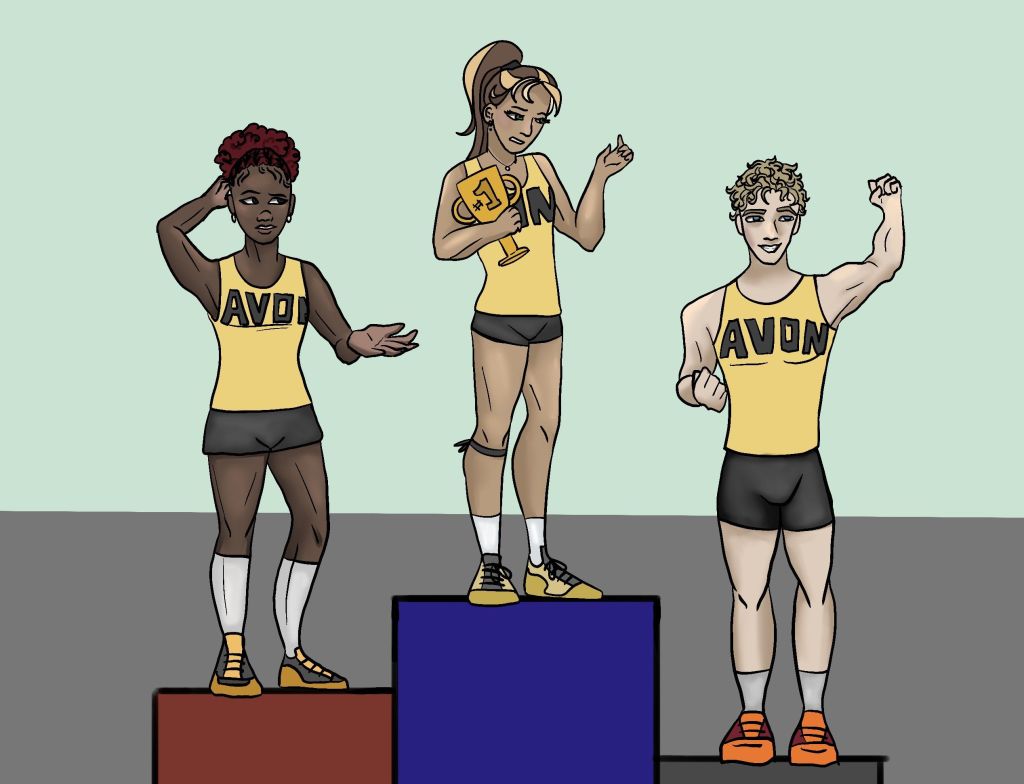
By Lucia Imel // Reporter • Illustration by Sunny Smyth
When senior soccer player Maya Riggs was in middle school, she often dealt with comments from male soccer players. “They’d always say they were better, faster, stronger and just overall better than me in the sport.”
Riggs is one of many athletes who have heard their share of negative comments over the years from male athletes trying to make themselves seem better than their female counterparts.
Riggs went on to say that “hearing those comments hurt, and hurt a lot of young girls affecting their confidence.”
A study published in ScienceDirect found that female athletes who receive critical comments from teammates suffer from significantly lower self-esteem and higher anxiety than those who do not. The study noted that women perceive the severity of verbal criticism much more intensely than men.
Comments from male athletes not only affect female athletes but also young girls, constantly bringing females down and making them think they aren’t good enough to compete in their sport.
As far as high school sports go, Riggs has noticed a trend in attendance when it comes to the boys and girls teams.
“Our student section for the girls varsity team is very small,” she said, “but then we all go to the boys games and there is always a lot more students there versus.”
Riggs said it sometimes feels like the boys teams are having more success because they get more attention.
“The exposure makes them think that they’re better, even though we are able to keep up with them playing wise,” Riggs said. “Even if there’s not a lot of people that watch us.”
Not only do female athletes have to deal with comments from others, they also have to deal with the lack of attention and support from not only the student body as a whole but also fellow athletes.
Senior basketball player Erika Larson talked about her experiences with getting negativity and feeling judged through her sport.
“A lot of times boys will come to watch our games just to make fun of us instead of actually supporting us,” Larson said.
She said female athletes have to deal with the constant worry of hearing and seeing the laughter and banter from others, while they are just doing what they love.
Softball player Chloe Hunt said she and her teammates often get bombarded with comparisons to baseball.
“I play a sport where there’s a lot of comparison and you feel a lot of pressure to be the best at what you do,” Hunt said, “so it can affect your play and your mental ability to play the sport to your best of your ability when you’re constantly being compared to the people around you.”


Leave a Reply